Showing posts with label Adam Lindemann. Show all posts

Sunday, September 14, 2008

Lessons for start-up companies, learned from TC50

These are the lessons I summarized by attending the TC50 conference. At the meantime, Adam Lindemann, CEO of Imindi, has written a well Imindi graph of his experience.

To save time, in this post I only publish my thoughts in Imindi graphs. By clicking "Summary by Yihong" you may watch my thoughts. Moreover, by clicking "Summary by Adam" and then "The Event," readers may see all the thoughts written by Adam Lindemann in his post without the need of browsing away from my site. The mind graph has automatically connected my thoughts to Adam's existing thoughts.

I have spent about 15 minutes to publish my thoughts using Imindi graphs. If I had written a normal blog post that had organized all the thoughts into article, it would have taken me at least an hour and the main points would not have been so clear as it is now. By the way, have I mentioned the connection of my thoughts to Adam's thoughts?

Friday, June 06, 2008

We are in a new transition, part 2

By two parts, I response to the Harmonious Age suggested by Adam Lindemann. In the first part, I describe its philosophy by civilization evolution. In the second part, I explain the impact of this theory to Web industry. This is the second part of my response.

World Wide Web, the new-age Watt steam engine

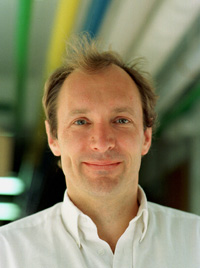
At the end of the 20th century, an Englishman Tim Berners-Lee invented how information could be transferred easily over the Internet by using hypertext. The invention is named World Wide Web. This invention is bringing human society to a new age.

Two centuries ago, another Englishman James Watt invented a machine called Watt steam engine. The machine made use of steam at a pressure just above atmospheric to drive the piston helped by a partial vacuum. This invention is more than another technological innovation. By contrast, the invention is a formal mark in history that capitalism had replaced feudalism. Because of Watt steam engine, industrial production was upgraded from the traditional, low-quantitative handicraft work to the modern mass production. Modern industry started emerging above the surface. Also due to this upgrade, capital (the base of modern industry) replaced land (the base of traditional agriculture) becoming the key asset in human society. Human civilization thus evolved from feudalism to capitalism.

World Wide Web is the modern-time Watt steam engine. Due to WWW, information industry is upgraded from handcraft, low quantitative production, elite-conducted work (by professional journalists, photographers, software programmers, etc.) to machine-powered, mass production, plebeian-conducted work (by every regular Web user). Information industry is evolving to its postmodern stage---Web industry. With this upgrade, mind, the base of information industry, is replacing capital, the base of traditional industry, to be the key asset of human society. Human civilization is evolving from capitalism to a new age.

Mind asset, the essential issue

Mind is always an asset. The potential productive power of human mind is known to be overwhelming. Nearly none production could be done without the participation of human mind. Furthermore, people has realized the power of mind for long time. Modern education is a typical effort that people are trying to make a product line of high-quality mind asset.

On the other hand, however, we often experience difficulties when trying to effectively use mind as asset. Unlike land or capital, individual mind is essentially intangible except for the owner of the mind. Presenting mind explicitly in formal ways is a long-time hard problem. Without explicit, formal presentation of mind asset, we cannot efficiently connect and compose varied mind asset and we cannot well measure the value of mind asset. The issue of mind aggregation is particularly critical because individual mind is often too shallow to be high quality.

Among all the others, the issue of mind-asset presentation is the central one. A formal, tangible presentation of mind asset is the key to let mind asset be circulating. Circulating mind asset is then the basis of the new civilizational transition.

Web resource, new presentation of mind asset

In tradition, we have developed varied forms of mind presentation. For example, books, tapes, drawing artifacts, buildings, etc. Through these forms, humans embody mind and preserve the embodied mind to be asset.

There are, however, at least four common problems in these traditional forms of mind asset.

(1) [cost] It is costly to produce mind asset in these presentations, and it is generally more expensive to share mind asset in these forms. In consequence, only the mind asset produced in superior quality (such as best books or artifacts) can be widely spread and shared.

(2) [strength] None of these presentations last long time. They can hardly survive from various natural or man-made disasters such as earthquake or war.

(3) [quality] By adopting these traditional presentations, we may embody mind in its static and passive aspects. But the forms are not good enough to embody the dynamic and active (which is the more valuable) aspect of human mind, let it alone some deeper implicit aspects of human mind such as self.

(4) [measurement] We do not have generic, objective methods to measure the value of mind asset in these traditional presentations.

If an asset is costly to present even in its low-quality form, with weak strength to survive longer, and unable to be measured objectively of its actual value, surely it is not a reliable asset for public to own and share. This problem is fundamental to information industry since mind asset is actually its base. The invention of World Wide Web solves the problem.

mindW3C defines World Wide Web to be "the universe of network-accessible information, the embodiment of human knowledge." This specification expresses three facets of the Web. First, the Web is a place for people to embody their mind. Second, the Web is a network of embodied mind. Third, through the Web people may access each other's embodied mind.

In particular, the mind asset on the Web is presented by Web resources, which are independent pieces of embodied human mind that can be used for producing. Note that this definition of Web resource is not a common one. In common (such as the one in Wikipedia), a Web resource is any object on the Web that is referenced by an URI. Such a definition has not precisely described the essence of Web resources if we compare it to the W3C definition of World Wide Web. By contrast, my new specification is directly based on the W3C Web definition. A Web resource may be a collection of Web data, a Web service, a Web link, or a mixture of them. A Web resource could and should be referenced by an URI, but a Web object referenced by an URI might not immediately be a Web resource unless it may produce. (more descriptions of my interpretation of Web resource are at here.)

the issue of cost

Comparing to producing the traditional forms of mind asset, Web resource production is cheap. The Web is a free and open place for everyone to embody mind. Web resources are presented in digital form, and digital form consumes very few natural resources. Hence in total Web resources are inexpensive to produce. Moreover, sharing Web resources also costs little. In consequence, we can now afford spreading and sharing the embodied mind even if it is in inferior quality.

the issue of strength

Web resources can last long time. Due to the low cost of digital copy and the flexibility of resource transmission on the Web, we may ideally preserve any piece of embodied mind nearly forever. In addition, World Wide Web is a virtual world. Hence it has great strength to survive from most of the real-world disasters, either natural or man-made.

the issue of quality

The most important improvement Web resources have made beyond the traditional forms of mind asset is their presentational quality.

In the traditional forms such as books or video tapes, we can introduce a mind as well as how it works. For example, a stock-market expert may write a book about what stock is and the timing of buying and selling stocks. But the book would not (if ever possible) tell the mind-asset consumers (the ones who read the book about stocks) the exact judgment of stocking selling the author would do in real time cases. The book readers have learned from a book the general principles. But it does not mean that the readers can consume the mind asset as well as the author does in real life. There is a natural gap between the presented value of the mind asset in the book and the real value of the mind asset in real world. This gap of knowledge understanding is a typical difficulty of mind asset measurement.

To solve the problem, on the Web people can program their mind (a typical dynamic mind asset) so that the production of their embodied mind could be precisely predictable by adding real-time parameters. In our example, stock-market experts can program their thoughts so that the program always produces the identical decision in the same real time case no matter who use it. This type of mind asset thus has higher quality than the standard static mind asset because it is more productive in use.

Moreover, on the Web we may embody a special type of mind asset that we rarely have successfully expressed before. It is self.

Self, self-consciousness, or self-awareness, is "a personal understanding of the very core of one's own identity." Due to self everybody is unique. By self, different people may develop varied use of the same knowledge. We thus have the variety of human mind. Self is so unique that nobody can embody the self of the others. The embodiment of self shows the ultimate value of a person, and hence it represents the respect of humanity. As a typical mind asset, self plays a critical role in many fields of World Wide Web, such as the implicit Web and Web evolution.

the issue of measurement

By presenting mind in Web resources, we are able to objectively measure its value as if we measure the value of capital asset. As we know, though there is a large variety of capital asset (such as stocks, real estates, etc.), we can uniformly measure its value by testing the capital asset in free market. In the similar way, we may objectively measure the value of a mind asset presented by Web resources. On the free Web, the value of a Web resource can be arranged completely by the mutual consent of producers and users.

Web Industry, platform that mind flows

While World Wide Web is a network of embodied mind, Web industry is the platform that mind flows. In the real capital world, modern industry (represented by the manufacture industry) takes capital as input and produces capital with greater value. In the virtual mind world, postmodern industry (represented by the Web industry) takes mind as input and produces mind with greater value. This analogue tells the essence of Web industry.

Web companies are the factories that produce Web resources. They may primarily produce data resources such as Amazon, or service resources such as Facebook, or link resources such as Google. Discarding all the superficial distinctions between each other, all Web companies are taking a few mind assets as input and producing a few mind assets as output. Ideally, the value of the output mind asset must be greater than the value of the input mind asset. Mind is the blood flowing around the system of Web industry, which is similar to that capital is the blood flowing over the system of manufacturing industry.

Web companies also partition their work load and cooperate to each other the same way as the other industrial corporations do. Take the traditional manufacture industry as an example, some corporations (such as iron puddling factories) pretreat crude materials and produce refined materials or parts while some other corporations (such as automobile manufactures) take refined materials and parts to produce further manufactured products. In similar, some Web companies (such as Blogger) are to help people embody their mind into Web resources from scratch while some other Web companies (such as del.icio.us) are to take the already embodied mind as input (such as a blog post in Blogger) and to produce higher quality mind assets that can be consumed better by end users.

There is, however, a unique restriction of Web resource producing and consuming in Web industry. Due to Web evolution, neither the production nor the consumption of Web resources may beyond the evolutionary stage of World Wide Web at the meantime.

Web resources produced in quality higher than what can be efficiently consumed at the meantime is overqualified. Yahoo! Directory is a typical example. The quality of link resources produced by Yahoo! Directory was generally beyond what Web 1.0 users could efficiently consume. Hence the service became very expensive to maintain. Eventually, Google Search replaced Yahoo Search being the leader of Web search industry thought the actual quality of link resources produced by Google Search is lower than the quality of link resources produced by Yahoo! Directory. (This is, however, not necessarily the end of the story. Y!OS is the newest step Yahoo is taking for Semantic Web. Will Y!OS eventually tend to produce overqualified Web resources again? We have this concern.)

On the other hand, Web resources produced in quality lower than what can be efficiently consumed at the meantime is underqualified. The examples in this category are plenty. In the age of Web 2.0, many Web-1.0 companies have to update the quality of their produced Web resources to the level of 2.0 or otherwise their market share is quickly taken by their Web-2.0 startup competitors.

Because of Web evolution, mind asset production is so dynamic that no company (including Google) can stick to one product quality for long. Web companies have to upgrade the quality of their produced mind assets with the progress of the Web every few years in order to just survive. Hence Web industry is indeed a business type with high risk and high payback.

We are in a new transition

We are in a new transition. The widespread of World Wide Web is the trigger of the transition. Because of the Web, the first time in history human mind becomes a critical circulating asset in society that ordinary people can buy, sell, produce, and share. The rise of mind asset will eventually push the human civilization evolving from the age of capitalism to the next.

We are still at the early stage of this transition. In similar, the Web is still at an early stage of its evolution. The Web companies that lead the progress of Web evolution will simultaneously be the leaders of human civilization in this transition. Until now, we have seen a few of these leaders such as Google and Facebook. They have led not only new technologies, but also the change of culture in our society.

Based on what we have analyzed, to be a leader of Web evolution is actually less about doing business in a particular realm such as "Web search". By contrast, the success is primarily determined by whether the founders of company have (either actively or unconsciously) well foreseen the quality of Web resources (or mind asset) in the next generation. Google approaches the quality through Web search while Facebook approaches the same quality by social networking. Neither of the success is due to the path they choose to take because at the same time many other companies were taking the same path as they did. The key of their success is the distinction of the quality of Web resources the two companies produce.

Which companies may be the next in the list of success? Though we don't know the names, one thing is certain---the ones understanding the resource quality upgrade of Web evolution may get the better chance to be the winners. Such a successful company might be another Web search company, might be another social networking company, or might be a company with a brand new focus. As we have said and I emphasize it again, the particular path taken by a company is not the deterministic factor. Different founders may have their preferred realms of interest. To the end, the variety of human mind allow us to approach the same goal in various paths. The actual key to the success is whether the founders are capable of foreseeing the progress of Web evolution, especially the progress of Web resource (mind asset) quality upgrade. Neither over-qualification nor under-qualification may clinch a winner. It can only be a perfect hit of the right quality.

Monday, May 26, 2008

We are in a new transition, part 1

(also read the article in Chinese, translated by the author himself)

By two parts, I response to the Harmonious Age suggested by Adam Lindemann. In the first part, I describe its philosophy by civilization evolution. In the second part, I explain the impact of this theory to Web industry. This is the first part of my response.

We are experiencing a new transition of civilization in human history. This is the first time since the last industrial revolution from late 18th to early 20th. I do not distinguish the first industrial revolution from the second industrial revolution because the two individual ones are consecutive phases of the same transitional event. After the industrial revolution, human society finished the transition from feudalism to capitalism. At present we are experiencing the next transitional movement from capitalism forward. The destination of this transition is unknown yet, though it seems unlikely to be either socialism or communism. Adam Lindemann prefers the term Harmonious Age to describe the coming new age. Or we may just simply name it the new Web age. If someone is from ivory tower, a likewise academic name may be the mindlist society.

From feudal society to capitalist society

A transitional period of civilization has its symptoms. To understand the symptoms happening at present, however, we need to first understand the symptoms happened before. By comparing the symptoms in last transition to the symptoms at present, we may have better understanding of the present status.

Feudal society was typically known for its overwhelmingly agrarian economy with limited money exchange. Due to the agrarian economy, land was the key asset in feudal society. By tightening people to land, landlords were the ruling class in feudal society. Kings or emperors, normally known to be the biggest landlords, were the society leaders. Feudal nations were ruled by these kings and emperors. In general, every feudal nation simply self-supported itself by its own agrarian economy and there were few economical communication among these feudal nations. The fundamental infrastructure of feudal society is a set of independent kingdoms.

At late 18th, feudal society was coming to its end at global wide. The invention of mass-production machines such as Watt steam engine was the trigger. These inventions appealed liberating humans from land for the sake of the emerging modern industry. Capital gradually replaced land to be the key asset of society. At the same time, it appeared a new class of people---capitalists.

After more than a century of wars and revolutions, capitalists finally defeated landlords to be the ruling class of a newly formed society, which we all know now to be the capitalist society. The owners of industrial corporations (the capitalists) became the leaders of the new society. The leaders of capitalist nations are either capitalists themselves or (more often) the representatives of certain groups of capitalists. There is, however, generally no place for kings or emperors in capitalist society.

Unlike the old-time agrarian economy, modern industrial economy demands close cooperation among varied corporations since no single corporation can just complete support itself without help from other companies. Hence the fundamental infrastructure of capitalist society is a network of mutual-dependent corporations. Unlike the territory of a feudal nation is measured by the size of land, the territory of a capitalist nation is measured by the strength and influence of its capital. For example, Japan is more influential than Brazil and Israel is more influential than Egypt in capitalist economy though the land of the former nations is much smaller than the land of the latter ones.

Ordinary people in capitalist society are tightened to capital instead of land. Every working-class people is first bound to his/her trained profession. The fate of a profession is, however, decided by capital. The professions that help produce more capital are encouraged by the society and thus more people run to take these majors. On the contrary, the professions that do not or no longer help improve capital generation are diminished and thus less people become willing to learn them. By Adam Smith, the flow of capital is the invisible hand which controls all aspects of capitalist society.

The following table summarizes what we have discussed so far.


feudal societycapitalist society
most valuable assetlandcapital
society organizationindependent kingdomsmutual-dependent corporations
society leaderking/emperorcorporation owner

Capital, the wonder and the problems

The rise of capital was a fascinating wonder in history. Capital frees human from the fastening of land. Capitalists demand people to be free of moving from one land to another so that they can have enough opportunities to hire people with certain skill for capital production. In feudal society, this request meant a great deal of freedom to ordinary people. Even until now, this demand is still a crucial piece of the foundation that supports the freedom in capitalist nations. The continuous increase of capital production cannot be promised without this freedom. (US people may need to think more of it with respect to the current immigration debate.)

On the other hand, however, capital is near-sighted and selfish.

Short-term payback is crucial to the flow of capital. The lack of short-term profits can easily kill a long-sighted visionary capitalist without a question. An analogy is probably the best way to explain the reason behind.

If land is solid, capital is liquid. A business oppotunity is a hole on ground. Unless the size of the hole is at least equal to or the better be greater than the size of the solid, we cannot push the solid into the hole (even though there is indeed a hole on ground). By contrast, liquid can easily flow into any hole disregarding of the size and depth of the hole. This difference explains why capitalist society is better than feudal society on producing wealth.
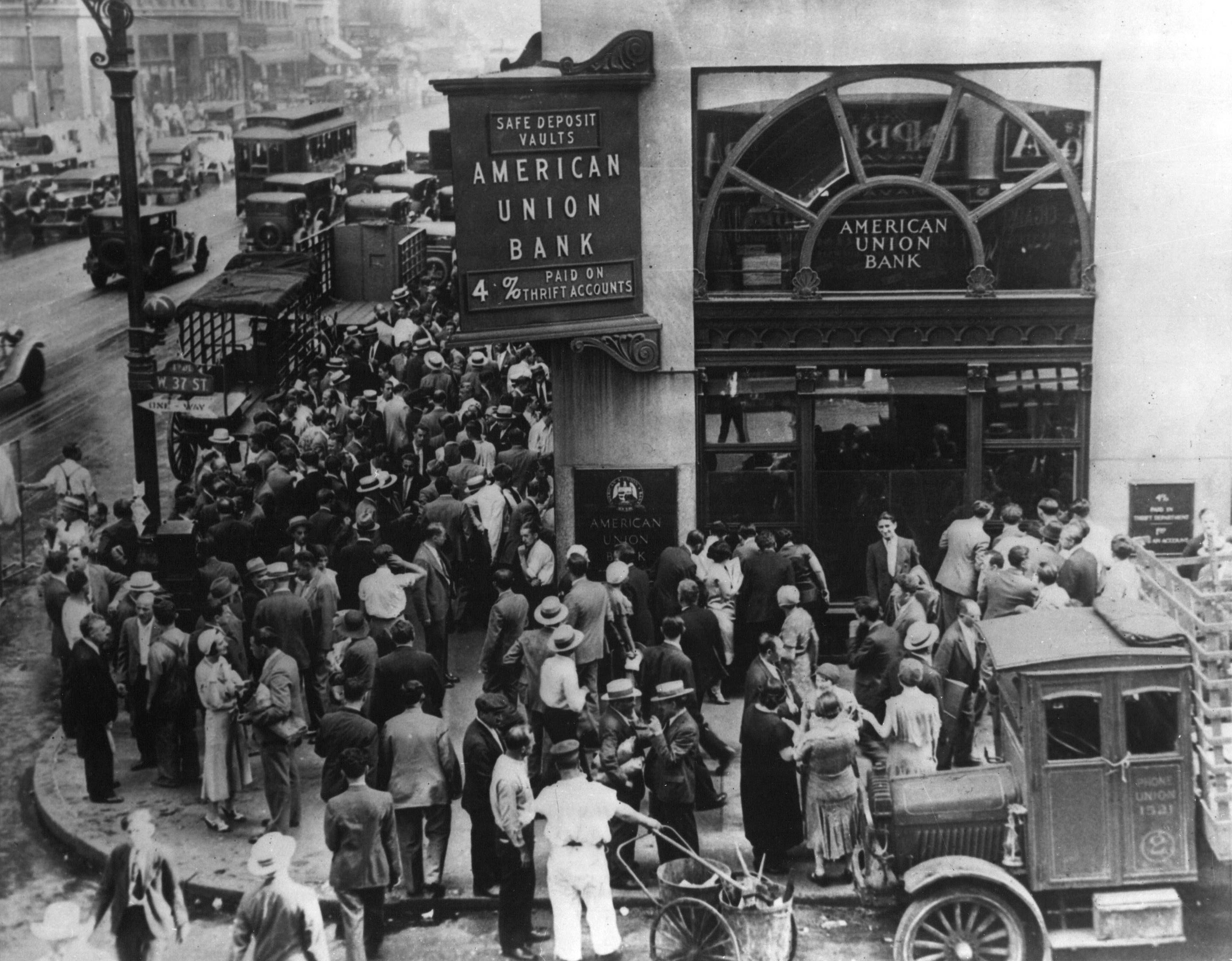
At the same time, however, liquid flow is near-sighted. Liquid immediately flows into the nearest hole. Even if there is another hole that is bigger and deeper but a little bit farther in distance, liquid will not flow into the farther one before it has filled the nearest one. Furthermore, it is not easy for liquid to get out of a filled hole and flow to another. This near-sighted problem of capital has caused many economic disasters in the history of capitalism such as the Great Depression.

Capital is also selfish. In general capitalists only look for the professionals (be note, not necessarily the humans, for example, if robots can do a profession better than humans, capitalists will definitely hire robots but fire humans) that can produce more capital. Except of incremental capital generation, nothing else is more important. Capital serves only itself.

In the job market of capitalist society, ordinary people are always in a passive position comparing to the interest of capital. A job oppotunity in capitalist society is rarely about what an ordinary person want to do. By contrast, it is solely about which profession helps produce more capital. What ordinary people can and should do is to study the skills that are demanded by capital. The value of an employee is determined by how much he can produce capital through his profession. Essentially, capitalism turns humans to be various standard screws that can be flexibly assembled in various assembly lines at anytime and at anywhere. Some screws are expensive to be made (and thus these people can get high salary) while some others are cheap to be made (and thus their salary is low). This is the only difference among all the screws. Capital does not serve for the interest of screws.

In compatible to this capitalism, the modern education system mainly focuses on training scientists and engineers but not thinkers. Scientists and engineers are the various standard screws we have just discussed. Capitalists do not need thinkers who have their own ideas because screws do not need to think beyond their own function.

After the flourishing time of great thinkers from late 18th to early 20th, capitalist society is engaged by plenty of scientists and engineers but fewer thinkers. Moreover, the specialty realm of a particular scientist or engineer becomes narrower and narrower in time. Using our analogue, screws are made more and more for special purpose.

With the advance of technologies, we also start to invent new machines that can replace the function of some special-purpose screws. Hence we start to lose many job opportunities for human employees. For instance, the invention of automatic assembly line has significantly reduced the number of manufacture workers in factories. To the end, if one day machines can satisfactorily take all the job professions, why do we still need human in this world? Or to the least, we only need to have the capitalists live in this world and all the other people become meaningless to this capitalist society.

The advance of a human society is to reduce the meaning of humanity in the society. This is an ironical dilemma in capitalist society. This dilemma is caused by the overlooking of a central issue of human society. The issue is human itself.

Human, the missed issue

Humans are not screws. Although this statement is so simple that even first-grade elementary school students can understand it well, it is so hard in civilization evolution to truly make humanity be the key asset of a society. In fact, we have never succeeded in this goal before.

At feudal society, humans were subordinated to land. Kings obtained people by occupying land. Kings generally did not care individuals but only the total number of people in their land. If a king lost an ordinary John but be replaced by an ordinary Peter. It often did not count a loss (neither a gain) for the king because the humanity of neither John nor Peter was critical. The size of land and how much fertile land they own were more critical issues to the kings.

At capitalist society, humans become subordinated to capital. Capitalists obtain people by occupying capital. Individual professions have become an important criteria to evaluate the value of a person. But still the issue of humanity is not critical. Capitalists would rather to replace a human with a machine immediately only if the machine can do the same profession the human does. The actual willingness of an ordinary John is not a consideration of capital. If one screw no longer fits, just throw it away and replace it with another screw which fits. This is the fundamental philosophy of capitalism.

Isn't it a pity that a human society does not really care of humanity as a first-class asset?

Mind, the asset of humanity

So what is the asset of humanity? To answer this question, let's start with examples.

I am a computer science professional, so I know computers. If I write a program that executes in my computer, I know that it will execute the same way and produce the same answer in the other computers. It is not just computers that have this property. All machines are the same. If we have "educated" (i.e. programmed) a machine to do a function, we can be sure that this machine will do the same thing, no less and no more, all of its life.

Now let's switch to a similar scenario but with different participants. We have a class of students and there is a teacher educates them. Ideally, if the students were machines, after the class we would have a group of students with the same knowledge who could use the knowledge to do the same thing and produce the same answers (since they are taught by the same teacher at the same time in the same place). But we know this is not the case. If the class have 30 students, you can expect 29 (the last one was sleeping at class so he does not count) different ways of using the learned knowledge and having produced varied or even contradictory results.

What is the difference between these students and machines? Humanity. Creativity of human makes everything difference. By pushing identical knowledge into the brains of many people and teaching the same skills to the bodies of these people, we are not producing identical professional workers. By contrast, we can expect countless ways of combining knowledge with skills so that the production could be different from one person to another only because these people are humans. This is the asset of humanity, and thanks to this asset we have our diverse world.

If we are allowed to use only one term to describe this asset of humanity, I choose mind. It is mind that represents the real value of each person. Different people can have the same knowledge and with the same skill. But they still bring the world different production because they are distinct persons. John is not Peter, Peter is not John, and neither of them is a screw. If we allow them freedom, they can produce varied fascinating products for us even if they have the same "profession". This is the value of mind asset.

Unlike capital, the mind asset is long-sighted and generous.

Let's apply our analogy again to explain the long-sighted. If land is solid and capital is liquid, mind is gas. Because it is gas, it can fill everywhere simultaneously disregarding the distance of a hole. A little liquid may fill only one small hole. But a little gas can fill all holes no matter how big they are. This is the power and value of humanity.

Mind is also generous. Land is to produce more land, so we have wars. Capital is to produce more capital, so we have the diminishing of humanity. But mind is to produce more mind. Since mind is the value of humanity, we will have a better harmonious age---which is what Adam Lindemann declares.

Harmonious Age, the future?

If the Harmonious Age is the future, the following table describes the change we will see.


feudal societycapitalist societyharmonious society
most valuable assetlandcapitalmind
society organizationindependent kingdomsmutual-dependent corporationsinteractional mind groups
society leaderking/emperorcorporation ownerthinker

Mind is going to replace capital becoming the key asset in the new society. This replacement does not mean that capital is going to be valueless. Land is still a very much valuable asset in capitalist society. The only difference from feudal society is that land is no longer the key asset. In similar, capital will continue to be very much valuable asset in the coming harmonious society. But capital will no longer be the key asset. In feudal society, people who had land owned capital and mind. In capitalist society, people who have capital own land and mind. In harmonious society, however, people who have mind asset will own capital and land. So the change is the sequence. But everything still has its own value.

Because mind becomes the key asset, the fundamental infrastructure of human society is going to change respectively. Corporations that serve for capital is going to gradually retreated to the secondary place, as in the previous transition nations that serve for land were retreated to be behind corporations. At the same time, new organization forms such as mind groups will start to rise.

A mind group will be a group of people leading by the new-age thinkers. Thinkers at the new age are the ones who know the art of composing various mind to produce. (For example, they are the ones like Adam Lindemann that is simultaneously capable of thinking and practicing.) These mind groups will become the new and most powerful productive forces (term used by Karl Marx and it has an alternative presentation "productive powers of labour" used by Adam Smith) in human society.

In this new society, the role of corporations will change in the similar way as the role of nations has been changed since feudal society.

In capitalist society, corporations belong to nations but at the same time they are independent to nations. Large corporations have their interest cross the border of many nations. The leaders of large corporations have at least the same influential as nation leaders, and they are often even more influential than the leaders of many small countries.

In similar, in harmonious society the mind groups may be bound to corporations but they are also independent to corporations. The memebers in mind groups will be able to decide their own fate but no longer allow corporations to decide their fate alone. Large mind groups can have their interest over varied corporations simultaneously. Great thinkers who are the leaders of large mind groups will be the true society leaders. In capitalist society, nation leaders must get support from capital, and hence the support from capitalists. In harmonious society, both nation leaders and corporation leaders must get support from the leaders of mind groups. Corporation leaders will be elected by the support from mind groups as well as the nation leaders in capitalist country must be elected by the support from companies. Since mind groups represent more free willingness of people, we can see that the control of society is gradually moving back to the hand of normal people.

Is this Harmonious Age indeed the future? Where are the mind groups? More important, how is the mind asset presented? Land is physical (so it is solid) that everybody can see and touch. Capital is not exactly physical but it can be measured by money in our hand (so it is liquid). But what the presentation of mind asset is and how we may use it for production. These are the crucial questions and I am going to address them in Part 2.
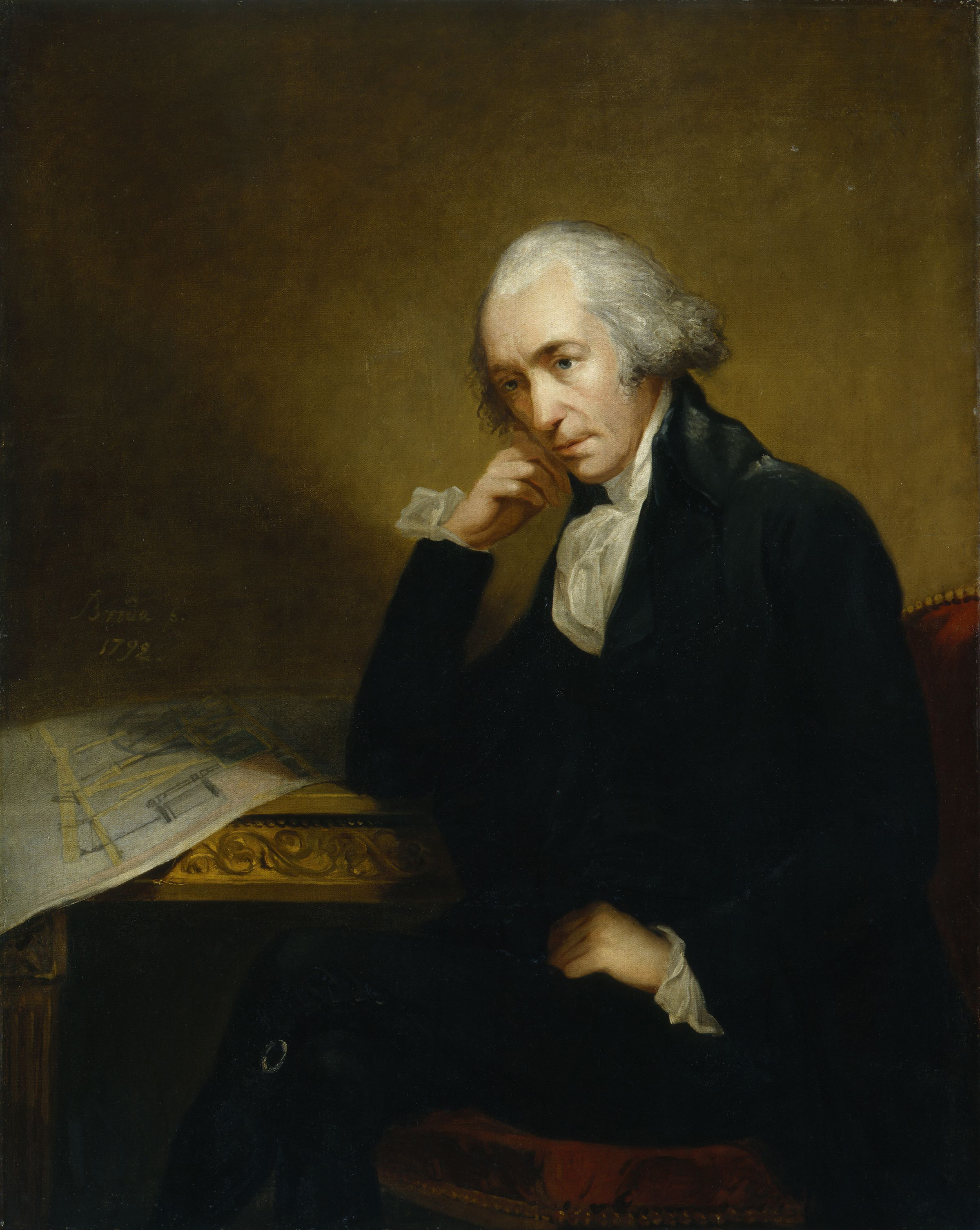
However, I will make a few hints here when concluding this Part 1. Commonly agreed, the start of the last society transition was the invention of Watt steam engine by James Watt. This invention made the foundation of the modern industry, which became the platform of the flow of capital. Hence we should expect a similar invention happened if the vision of Harmonious Age is really sound. Indeed, we have one. The new-time Watt steam engine is called World Wide Web, and the new James Watt is named Tim Berners-Lee. We are going to discuss more in Part 2.

Tuesday, May 20, 2008

The Harmonious Age?

(you may also read the post in Chinese, translated by myself)

The Harmonious Age is an interesting philosophical view written by Adam Lindemann. Adam is a liquid thinker whose thoughts are compelling while at the same time he is also a clear-mind businessman who is very practical in action. It is hard to find the two great characters within one person simultaneously.

I am particularly blogging this thought here because the derivation of this thought fits well to my philosophical view of Web evolution. In the later posts, I will explain the similarity in more details and especially on explaining how Adam's thought means in a broader picture of the new industrial revolution we are experiencing at present. But in this post, I just want to first introduce what he think that "we are moving through the transitional period between the Industrial Capitalistic Age and a new age that might be described as the Harmonious Age."

One more word before proceeding. It is interesting to notice the similarity between the Harmonious Age used by Lindemann and the Harmonious Society slogan named by the current Chinese President Hu Jintao and Premier Wen Jiabao, though I am quite certain that there is no necessary link between the two. The theory of Harmonious Society has been the foundation of the so-called Hu-Wen New Administration that leads to the current economical boom in China. With this successful comparison, could we expect Harmonious Age be another great theory to lead us to a new Web age?

The following is written by Lindemann. My interpretation will be posted in later posts. Please keep on watching if you are also interested in it. Trust me, it could be more interesting than you thought.


Before the 1800s there was a feudal society where wealth was stored in land and real estate.

After the 1800s and the industrial revolution wealth began to be created on a massive industrial scale. In this industrial capitalistic society, wealth was stored in a financial system that created many different types of money.

Real money such as cash, stocks and shares and bonds. It was the mind of man that harnessed the awesome laws of nature as well as its energy and resources to fuel this industrial capitalistic society.

However, mankind is reaching a limit to its ability to harness the natural physical resources of the earth such as oil, gas and other fossil fuels and hence growth is becoming unsustainable. The fundamental problem is that man based his survival at odds with an not in harmony with the natural renewable balance of nature. The mind of man did not truly understand the symphony of live on earth - it tried and succeeded somewhat in being clever and failed to be wise. This was a time of division in knowledge and hearts and minds. It was a time of artificial abundance for some and fear and scarcity for others. It was a time of nation states and world wars.

The 21st century will be an age where man achieves wisdom and learns to work in harmony with the natural physical and spiritual laws of the universe such that we live in balance and harmony with the earth and each other. It will be a time of the fusion of knowledge, hearts and minds. It will be a time where the illusion of scarcity will become replaced by the reality of abundance. It will be a time of peace and sustainable life for humanity on earth.

The key to understanding this shift is to realise that its all a mindset. Money=Energy and Energy = states of matter. The feudal society can be seen a solid. The industrial capitalistic society can be seen as liquid and the new age of the 21st century and beyond can be seen as gas.