
Clone: An Interesting Topic on the Web
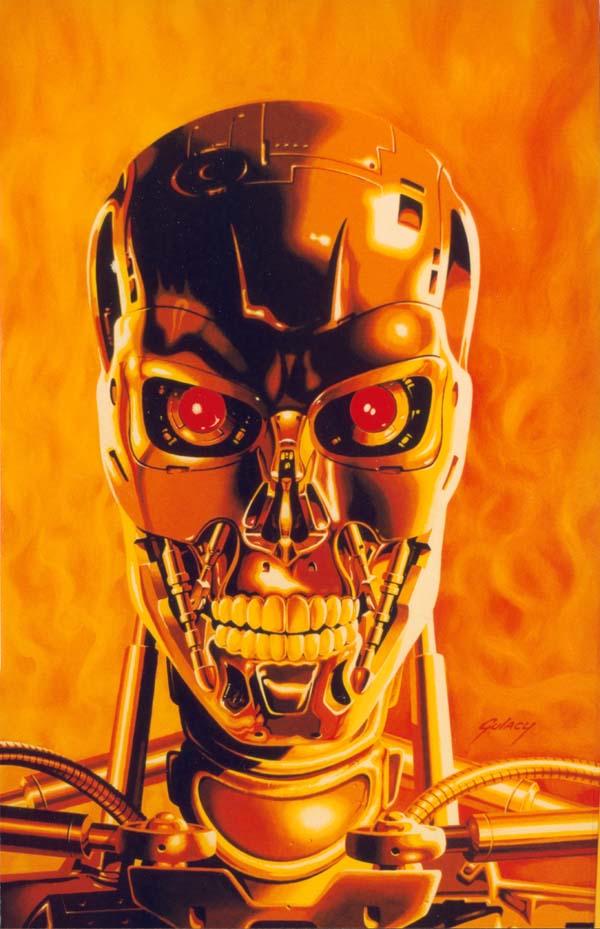
 Clone is an interesting topic for many people. Many of us may remember Star Wars series in which clones become terrible killing machines. But here we do not discuss these physical clones in Sci-Fi movies. In contrast, we are interesting in one question: do we need clones of web sites in World Wide Web?
Yesterday, Rogelio Bernal Andreo, founder of CoRank, posted an article at Read/WriteWeb in which he somehow degraded the importance of cloning. Although his arguments are fairly well self-explained in the article, I want to address another side of his arguments, i.e., web clones are important for a flourishing WWW.
Let's look at our human society. Disregarding the born-nature of individual human beings, we are producing clones, many clones, of several functional persons repeatedly. For example, at Los Angels there is a postman named John and at New York there is another postman named Peter. Disregarding that John and Peter has different tempers and personalities, they perform the same function with regard to the entire human society. If we exchange them and let John go to New York but Peter come to Los Angels, the entire society very likely keeps the same since both of them can simply perform their original functions and nobody else might care of this exchange. Therefore, John and Peter are indeed clones to each other if this discussion is with respect to the entire human society.
Besides the existence of this type of clones, a rich and complicated network such as the human society needs these existences. A crucial difference between a rich and complicated network and a simple network is their scales. In a simple network, such as within a small village, we probably need only one postman because there is a fairly small number of members. On the contrary, we definitely need more than one postman in US because of the significant larger number of people. As the result, we clone this single postman many times by, for example, our education and training system. By cloning this typical functional person (postman), we distribute a universal function (delivering mails) so that it can be well performed locally in our society.
As a richer and richer, and more and more complicated network, World Wide Web also needs this type of clones. It is fairly hopeless to assume that the advance of the distributional computation technologies could be faster than the growth of World Wide Web. In the other words, a single Google cannot solve all web search; and a single Digg cannot dig everything. We need to start thinking of the entire web as a society that is composed by many cities and towns instead of treating the web as a single village. Therefore, we indeed need (other than bury) clones, no matter they are Digg clones or Google clones. But one thing is important to these clones---they need to understand that we need only one USPS national wide, but there must be many clones of USPS offices across the nation.


 visits since Oct. 1, 2006.


 English to Chinese BETA
 English to French
 English to German
 English to Italian
 English to Japanese BETA
 English to Korean BETA
 English to Russian BETA
  English to Spanish